
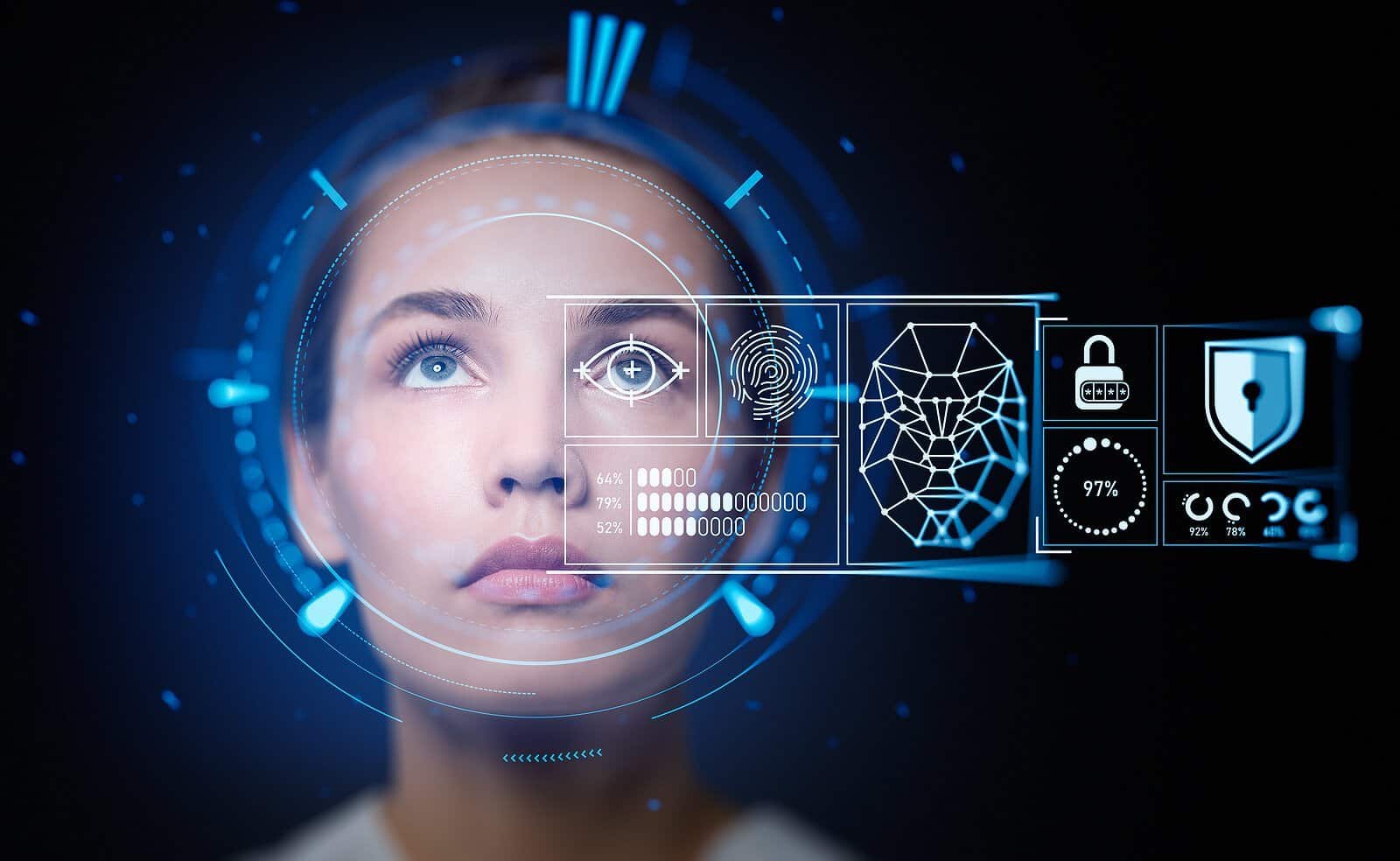
Facial recognition has quietly woven itself into our everyday lives. From unlocking smartphones and tagging friends in photos, to airport security checks and even online payments — this technology is no longer futuristic. It’s already here.
But what exactly is facial recognition? How does artificial intelligence make it possible? And why has it become one of the most talked-about AI technologies in the world today?
Let’s break it down clearly, simply, and honestly.
What Is Facial Recognition?
Facial recognition is a biometric technology that identifies or verifies a person by analyzing their facial features. Unlike passwords or PINs, which can be forgotten or hacked, facial recognition relies on something inherently unique: your face.
At its core, facial recognition works by:
- Detecting a human face in an image or video
- Analyzing distinct facial features
- Comparing those features with stored facial data
- Determining whether there is a match
Modern facial recognition systems are powered by artificial intelligence (AI) and machine learning, which allow them to become more accurate over time.
Why Facial Recognition Is a Form of Biometric Authentication
Biometric authentication uses physical or behavioral traits to identify individuals. Common examples include:
- Fingerprints
- Iris or retina scans
- Voice recognition
- Facial recognition
What makes facial recognition especially popular is that it is:
- Contactless
- Fast
- Easy to use
- Scalable across devices and cameras
This simplicity has accelerated its adoption across industries worldwide.
How Facial Recognition Works with AI (Step-by-Step)
While facial recognition may look simple on the surface, there’s a lot happening behind the scenes. Here’s how AI makes it all work.
1. Face Detection
The very first step is detecting a face.
Using computer vision algorithms, the system scans images or live video to locate human faces. It doesn’t identify the person yet — it simply answers the question:
“Is there a face here?”
AI models like convolutional neural networks (CNNs) are especially good at detecting faces, even in crowded scenes or poor lighting.
2. Face Analysis & Feature Mapping
Once a face is detected, the AI analyzes key facial landmarks such as:
- Distance between the eyes
- Shape of the jawline
- Width of the nose
- Depth of eye sockets
- Length of cheekbones
These details are converted into numerical values, creating a facial signature or faceprint — a digital representation of a person’s face.
Importantly, modern AI does not store images as photos. It stores mathematical data points, which improves both efficiency and security.
3. AI-Powered Facial Encoding
In this stage, deep learning models transform facial features into a high-dimensional vector. This encoding allows the system to compare faces mathematically rather than visually.
Even if:
- The person grows a beard
- Changes hairstyle
- Ages over time
AI models are trained to recognize consistent facial structures and adapt accordingly.
4. Face Matching & Verification
There are two main ways facial recognition systems compare faces:
1:1 Verification (Authentication)
Used when confirming identity — such as unlocking a phone or logging into an app.
1:N Identification (Recognition)
Used when searching for a face across a large database — such as law enforcement systems or airport surveillance.
AI calculates similarity scores and determines whether there’s a match based on confidence thresholds.
5. Continuous Learning with Machine Learning
One of AI’s biggest advantages is learning from data.
As facial recognition systems process more images:
- They become better at identifying faces
- Bias is reduced through diverse training data
- Accuracy improves over time
This self-improving nature is what makes AI-driven facial recognition far more powerful than traditional image matching techniques.
Key Technologies Behind Facial Recognition
Several AI technologies work together to enable accurate facial recognition:
Computer Vision
Allows machines to interpret and understand visual data from images and videos.
Deep Learning
Uses neural networks inspired by the human brain to identify complex patterns in faces.
Convolutional Neural Networks (CNNs)
Specialized neural networks designed for image processing and feature extraction.
Artificial Intelligence Algorithms
Enable decision-making, predictions, and continuous improvement.
Real-World Applications of Facial Recognition
Facial recognition with AI is already influencing multiple industries.
1. Smartphones & Consumer Devices
Most modern phones offer facial unlock features that:
- Improve security
- Reduce reliance on passwords
- Enable smoother user experiences
AI ensures accurate recognition even in low light or partial face visibility.
2. Airport Security & Border Control
Airports use facial recognition for:
- Automated check-in
- Identity verification
- Faster immigration processes
This reduces wait times and increases security efficiency.
3. Banking & Financial Services
Banks and fintech platforms use facial recognition for:
- Fraud prevention
- KYC (Know Your Customer) verification
- Secure transactions
It adds an extra layer of protection against identity theft.
4. Retail & Customer Experience
Retailers use facial recognition to:
- Prevent fraud
- Analyze customer demographics
- Personalize in-store experiences (where legally permitted)
5. Law Enforcement & Public Safety
Police agencies use facial recognition to:
- Identify suspects
- Locate missing persons
- Analyze surveillance footage
However, this area remains the most debated due to privacy concerns.
Advantages of Facial Recognition Technology
Facial recognition offers several key benefits:
- Fast and frictionless authentication
- Higher security than passwords alone
- Reduced fraud and identity theft
- Contactless verification
- Scalable across platforms and locations
When implemented responsibly, it can greatly enhance user convenience and safety.
Limitations & Challenges of Facial Recognition
Despite its strengths, facial recognition is not without challenges.
Accuracy Variability
Performance can be affected by:
- Poor lighting
- Extreme facial expressions
- Low-quality images
Bias in AI Models
If training data lacks diversity, recognition accuracy may vary across demographics.
Privacy Concerns
Unregulated use can lead to misuse, surveillance issues, and loss of personal freedom.
Data Security Risks
Facial data must be stored and handled securely to prevent breaches.
Ethical & Privacy Considerations
Facial recognition has sparked global conversations around ethics and regulation.
Key concerns include:
- Consent and transparency
- Data storage and retention
- Mass surveillance
- Algorithmic bias
Many countries now enforce regulations like GDPR and data protection laws to ensure ethical AI use.
Is Facial Recognition Safe?
Facial recognition is as safe as the systems built around it.
Best practices include:
- Encryption of facial data
- Limited data retention
- User consent
- Human oversight
- Regular bias audits
When deployed responsibly, facial recognition can be both secure and beneficial.
The Future of Facial Recognition with AI
Facial recognition technology is evolving rapidly.
Future advancements may include:
- Improved accuracy in diverse environments
- Emotion and expression detection
- Seamless integration with AR and VR
- Decentralized biometric storage
- Better explainability in AI decisions
As AI matures, facial recognition will become more transparent, ethical, and widely accepted.
Final Thoughts
Facial recognition powered by artificial intelligence is transforming how we interact with technology. What once seemed like science fiction has become a practical tool shaping security, convenience, and digital identity.
Like all powerful technologies, its impact depends on how responsibly it is used. When balanced with privacy, transparency, and ethical frameworks, facial recognition can enhance everyday life without compromising individual rights.
Understanding how it works is the first step toward using it wisely.